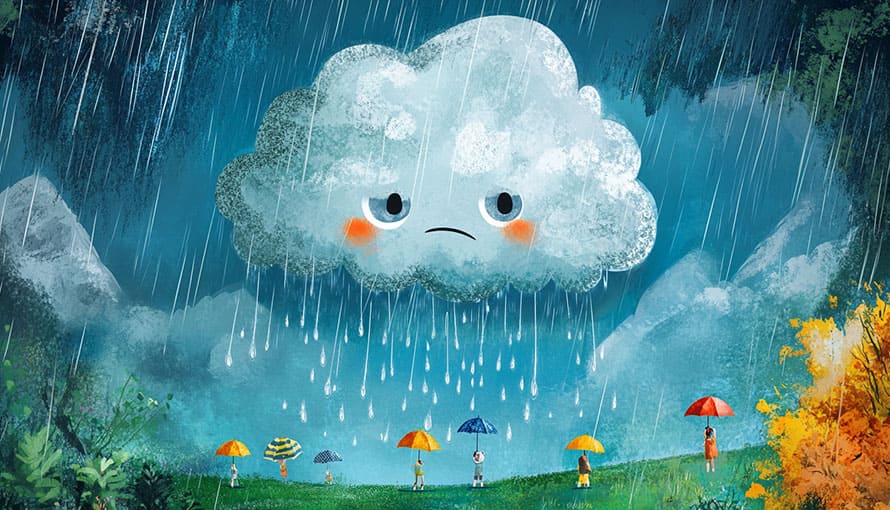
Have you ever looked up at the sky and wondered where those fluffy, cotton-like clouds suddenly come from, or why rain falls from them? Every cloud is the secret carrier of a story about water—traveling all the way from rivers and oceans up into the sky! Let’s go on a fun adventure together and discover how water droplets turn into clouds and what has to happen before the rain starts falling. You’ll see that what seems like ordinary rain is actually one of nature’s coolest wonders!
What Exactly Is a Cloud?
A cloud is a big bunch of tiny drops of water floating in the sky. Sometimes it looks like a soft pillow, a gray blanket, or even a scoop of sweet whipped cream. Clouds can change throughout the day—sometimes they’re thin and float high above like playful puffs; other times, they’re thick and bring rain or even a storm.
How Do Clouds Form?
Water in nature is always moving, even when we don’t notice it. Here’s how it happens, step by step:
- First, the sun warms up water on the surface of lakes, oceans, and rivers.
- When water gets warm enough, it turns into water vapor—a type of invisible mist that floats into the air.
- This vapor rises higher and higher into the sky.
- Higher up, where it’s colder, the vapor cools down and turns back into tiny droplets of water.
- When enough of these little drops gather together, they form a cloud!
Why Are There Different Types of Clouds?
If you look up, you’ll see several kinds of clouds. Some are small and white—they’re called cumulus clouds, and they look so fluffy you almost want to reach out and play with them. Other clouds are wispy and thin, like strands of hair—those are cirrus clouds found way up high. And then there are thick, gray clouds that often bring rain. These can cover the whole sky and sometimes even cause heavy storms.
Why Does It Rain?
Inside every cloud, something interesting happens: the tiny water droplets bump into each other and join together. When there are too many drops and they get really heavy, the air can’t hold them up anymore. That’s the moment when they fall to the ground—and it starts to rain!
Rain is super important. Just like the soil needs water so flowers and trees can grow, animals need to drink, too! Rain keeps the ground moist, cleans the air, and fills our rivers and streams.
The Water Cycle—Nature’s Adventure
Imagine water going on a big adventure. One day, it’s in an ocean. Then it rises through the sky as vapor and turns into a cloud. Rain falls, and the drops end up in a pond or soak into the earth. From there, the water travels through streams back to the sea. And then the cycle starts all over again! This water cycle is happening all the time. So the water in your glass today might be floating in a cloud above your head tomorrow!
Experiment: Make Your Own Rain Cloud at Home!
If you want to see for yourself how clouds work, here’s a simple experiment you can try:
- Ask an adult to help you heat water in a pot or electric kettle.
- Carefully hold a lid or plate above the warm water so you don’t get burned.
- Watch as steam collects on the plate and turns into tiny drops of water.
- The drops get bigger and eventually fall—just like rain.
This way, you can watch water turn into vapor and then back into drops—just like in a real cloud.
Why You Don’t Need to Be Afraid of Rain
Rain can sometimes seem scary, especially when a thunderstorm rolls in with loud thunder and flashes of lightning. But remember—rain is super helpful and keeps nature alive! Without rain, there wouldn’t be flowers, trees, fruits, or vegetables. Plus, after it rains, the air feels fresh and everything smells nice and clean.
In Summary
Clouds form when water from rivers, lakes, and oceans rises up as vapor, cools, and turns into droplets. These droplets gather together to make clouds. When there are too many, they fall as rain—which brings water back to plants, animals, and streams. The whole water cycle is a true miracle happening around us every day.
So, curious kids, that’s everything you need to know about clouds and rain. Next time you look up and spot a cloud drifting by, remember it’s an important helper for the planet. Without clouds and rain, nature couldn’t thrive. And sometimes, clouds bring us a special treat—a beautiful, colorful rainbow!
Stay tuned for the story of Cloud and Rain!