Hello, friends! Have you ever heard of horses that run wild across vast open plains without being owned by anyone? They’re called mustangs, and they’re the wild horses of North America. But unlike truly wild animals like zebras, mustangs actually descend from horses brought to America by Spanish explorers hundreds of years ago. Some of those horses escaped or were lost and started living freely in the wild. Over time, they adapted to life without humans and became the bold, strong animals we know today as mustangs.
What Do Mustangs Look Like?
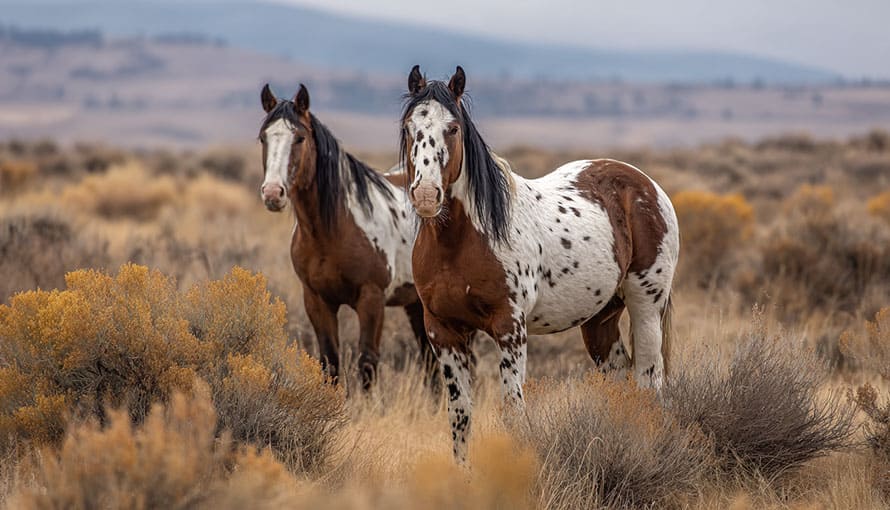
Mustangs are beautiful horses, but they don’t all look alike. They can be just about any color—from black and brown to red, white, or even spotted coats. They’re usually not as tall as the horses you see on farms or at riding stables. Instead, mustangs are smaller and more muscular, built to survive harsh conditions in the wild. Their manes and tails are long and often flow in the wind as they race across the plains. Their hooves are very tough because they walk over rocks and hard ground for most of their lives.
Where Do Mustangs Live?
Mustangs mostly live in the western United States—in states like Nevada, Wyoming, Montana, and more. Their home is the wide-open prairies and deserts where they can run free. They live in groups called herds, each led by a strong stallion (an adult male horse) who looks out for the others’ safety. In a herd, there are mares (adult females) and their foals (babies). Mustangs move from place to place to find enough food and water, which can be hard to come by in the desert.
What Do Mustangs Eat?
Mustangs are herbivores, meaning they only eat plants. Their favorite food is grass, which they graze on the prairies. In winter, when grass is scarce, they eat twigs and shrubs, tree bark, and any other plants they can find. Mustangs can survive in places with little food because they’ve adapted over many years to life in harsh environments. Every day, they have to travel far to find enough to eat and drink.
Super Senses
Did you know mustangs have amazing senses? Their eyes are set on the sides of their heads, so they can see almost everything around them—even what’s happening behind them! It’s almost like having eyes in the back of their heads. Their ears can swivel in every direction to catch sounds from all around, and they can hear noises far beyond what a person can hear. Thanks to these abilities, mustangs can quickly sense when danger is near. They also have a powerful sense of smell—they can detect water from miles away, which can save their lives in desert landscapes.
Mustang Behavior
Mustangs are clever and social animals. In the herd, they help each other and look out for one another. The older horses teach the young ones how to survive—where to find water, how to avoid danger, and how to behave within the group. Mustangs communicate using different sounds, ear positions, and tail movements. When they play, they often chase and show off with jumps and tricks. If there’s danger, the fastest horses warn the others, and everyone runs to safety together.
Why Are Mustangs at Risk?
Once, more than two million mustangs ran across the American plains. Now, there are only about 30,000 left—a lot fewer than before. This happened because people have taken over much of their land for cities and farms. Some people also captured mustangs to tame and sell them. Thankfully, there are laws protecting mustangs today, and organizations work to help these beautiful animals live freely in the wild.
Why Is the Car Called a Mustang?
Here’s a fun fact! You’ve probably heard of the Ford Mustang car. This famous sports car was named after wild mustang horses. When Ford introduced it in 1964, they wanted the car to stand for freedom, power, and speed—just like a mustang galloping across the prairie. And they succeeded! The Ford Mustang has become one of the most popular sports cars in the world and has been in production for over 50 years. On the grille, you’ll even find a logo of a running horse, so everyone knows what it’s named after.
Mustangs and Native Americans
Native Americans had a special connection to mustangs. When they learned how to catch and tame mustangs, it changed their lives completely. Before horses, they went everywhere on foot. With horses, they could travel much farther and faster, hunt bison, and move in search of food more easily. Tribes like the Comanche and Apache became superb riders. Native Americans believed horses had magical powers and often decorated them with paint and feathers for important events. They considered mustangs sacred and true friends.
Interesting Mustang Facts
Did you know a mustang can run up to about 31 miles per hour (50 kilometers per hour)? That’s faster than the world’s fastest human! Mustangs also have great memories—they can remember water sources over long distances and recognize every member of their herd. And did you know that mustangs sleep standing up? They can lock the joints in their legs so they don’t fall over, even when napping, so they’re always ready to run if danger appears.
Conclusion: Symbols of Freedom
Mustangs are not just beautiful animals—they’re also a powerful symbol of American history and freedom. They embody courage, independence, and resilience in tough conditions. People admire them for these traits, which is why the famous Ford Mustang carries their name. If you ever get the chance to see mustangs in a wildlife refuge or a documentary, don’t miss it. These magnificent animals show just how wonderful true freedom and living with nature can be.
Read a story about a mustang