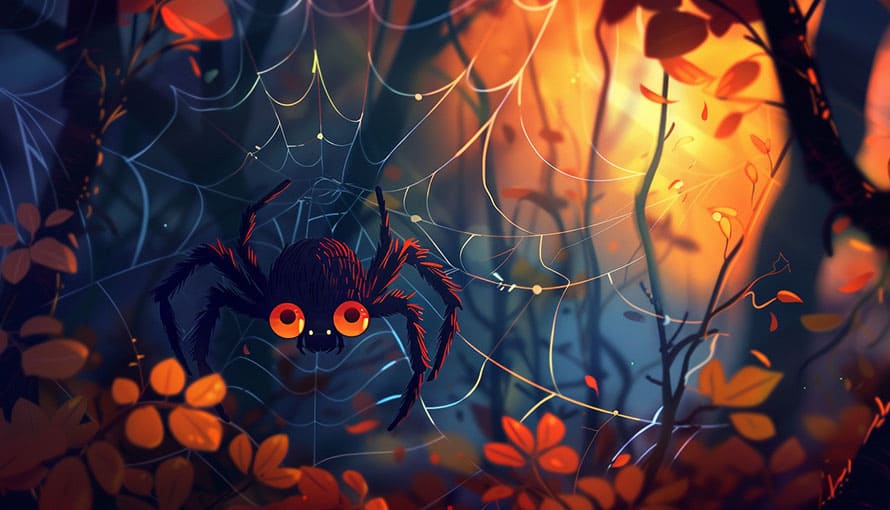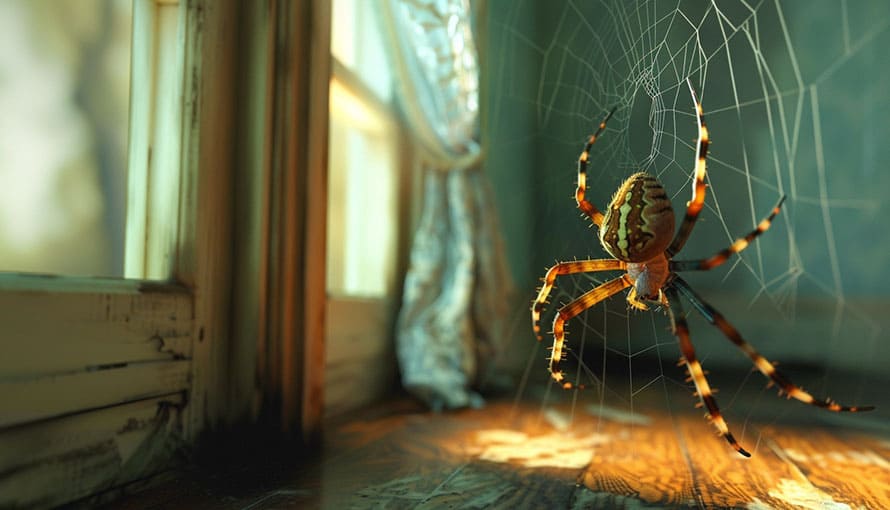
A spider and its web are amazing examples of nature’s creativity. A web is a clever hunting tool—and sometimes a place to rest. But how does a spider make something so intricate? Let’s follow the steps!
Silk: Strong Threads from the Abdomen
Spiders have silk glands in their abdomen. The liquid silk leaves the body through tiny nozzles called spinnerets and solidifies into threads. Spiders make different kinds of silk: some is strong and non-sticky (for the frame and spokes), and some is sticky (for catching prey).
Step 1: The Bridge Line
To begin, the spider releases a fine thread that can drift on a light breeze and attach to another surface. This creates a bridge line—the first anchor for the web.
Step 2: Building the Frame
The spider strengthens the bridge and adds more non-sticky threads to form a frame (like the outer rim of a picture).
Step 3: Laying the Radial Spokes
From the center to the frame, the spider adds multiple radial lines (spokes). These give the web its shape and support.
Step 4: The Temporary Spiral
Next, the spider lays a temporary, non-sticky spiral from the center outward. This spacing spiral helps keep the distance between spokes even while the web is under construction.
Step 5: The Sticky Capture Spiral
Working from the outside back toward the center, the spider replaces the temporary spiral with a sticky capture spiral. These gluey threads are the insect traps.
Step 6: Waiting and Sensing Vibrations
When the web is ready, the spider waits at the hub or in a nearby retreat connected by a signal thread. When an insect hits the sticky spiral, the spider detects vibrations, rushes over, and may wrap the prey in silk to eat later.
Why Webs Matter
Webs help spiders catch the food they need to survive with minimal energy. (Not all spiders make orb webs, but for those that do, the design is a brilliant blend of strength and stickiness.)
A Final Thought
Next time you see a spider web, remember the careful steps behind it—and how a tiny engineer turned liquid silk into an amazing, useful structure.
Read the story about a spider!