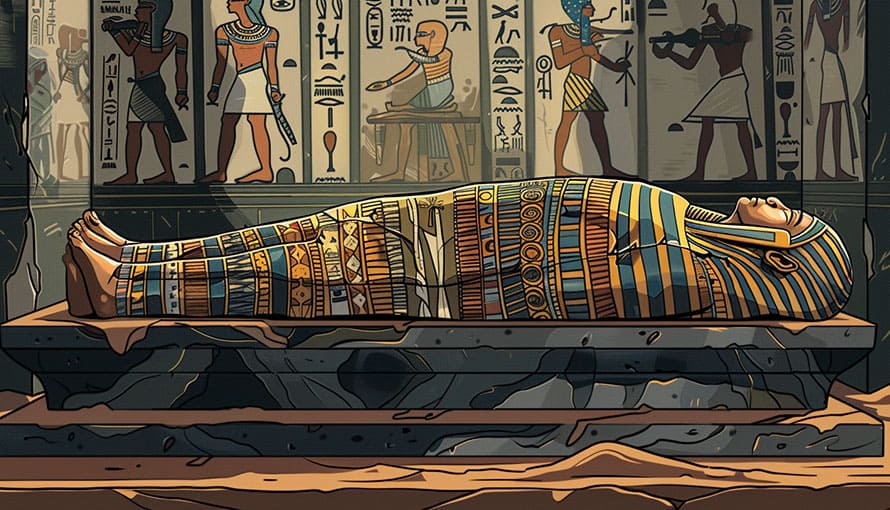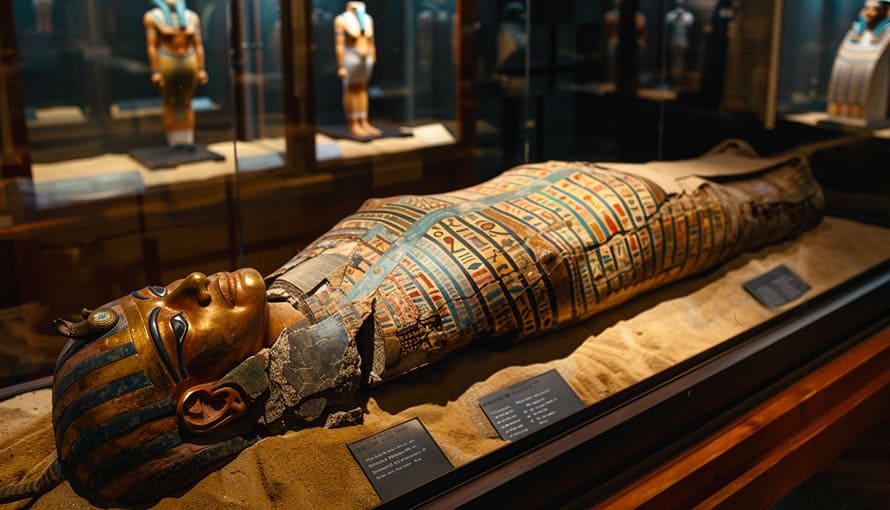
When you hear the word “mummy,” you might picture ancient Egypt and mysterious pyramids. But what is a mummy really, and why did people make them? Let’s find out!
What Is a Mummy?
A mummy is the preserved body of a person or animal that can last for a very long time. Some mummies form naturally in deserts or ice, but in ancient Egypt bodies were preserved on purpose with special treatments. Mummies have dry, firm skin and are often wrapped in long strips of linen.
Why Did Egyptians Mummify the Dead?
Ancient Egyptians believed in life after death. They wanted to keep the body intact so the soul—especially the ka (one part of a person’s spirit)—could return to it and live on in the next world. Caring for the body was a way to honor the dead and prepare them for eternity.
How Was a Mummy Made?
The whole process could take about 70 days.
Why Were Pharaohs Mummified?
Pharaohs—Egyptian kings—were seen as partly divine. Preparing a pharaoh’s body for the afterlife was especially important so he could continue to rule and protect his people. In the Old Kingdom, rulers were buried in pyramids; many later kings were buried in the Valley of the Kings to keep their tombs safer.
What We Learn from Mummies
Mummies teach us about history, religion, medicine, and daily life in ancient Egypt—from the materials they used to the beliefs they held about the next world.
Read the story about a mummy!