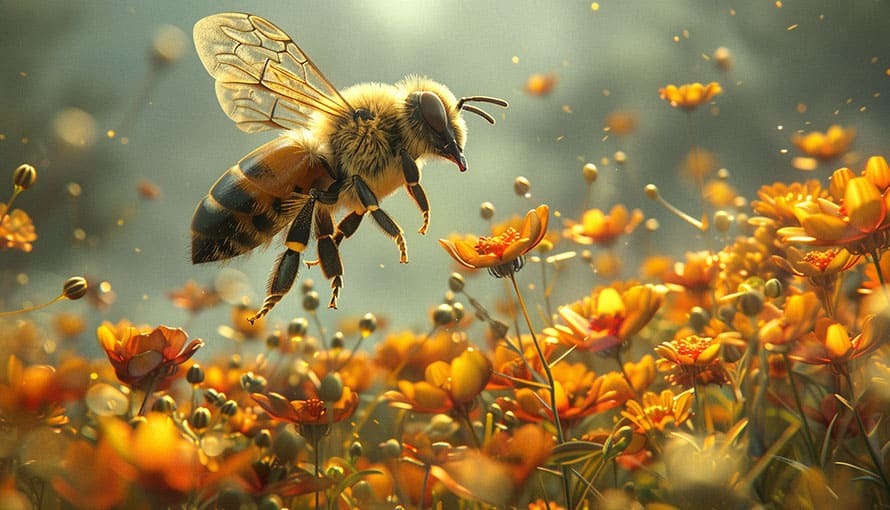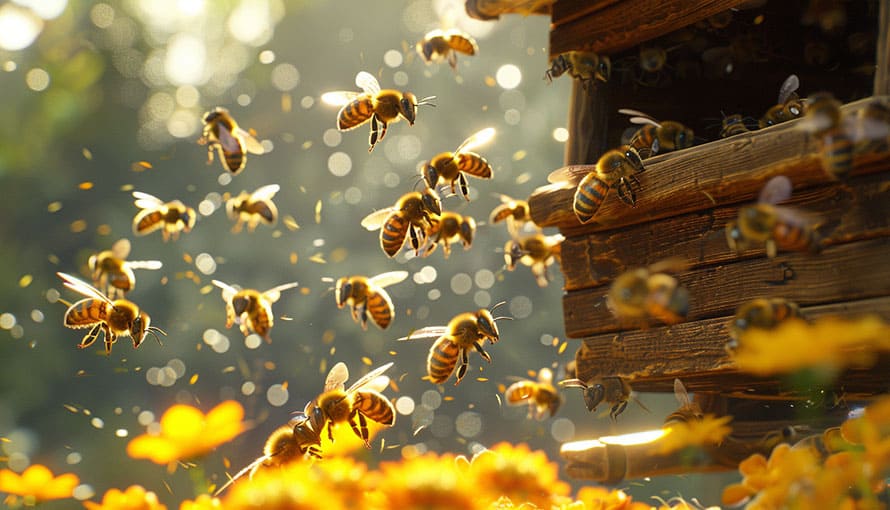
Bees might be small, but they play a giant role in making our planet buzz with life! These hardworking insects—many species, like honeybees, with striking yellow-and-black patterns—are essential for pollinating plants and keeping our world full of vibrant fields, gardens, and forests. Despite their tiny size, bees are true builders of life, and their amazing teamwork and dedication have helped them survive for more than 100 million years. Let’s dive into the remarkable world of bees and discover some cool facts that prove they truly deserve our respect and admiration.
1. Complex Communication
Bees have a sophisticated way of sharing information. They use the waggle dance to encode direction and distance to food sources, and pheromones to recruit nestmates and signal alarm. This unique “bee dance” is like sending secret maps through movement!
2. Key to Ecosystems
Bees are vital pollinators for many plants—including the crops humans rely on. Without bees, lots of flowers wouldn’t bloom or produce fruit. In fact, bees help pollinate roughly three-quarters of the world’s flowering plants!
3. Making Honey
Bees transform flower nectar into honey through enzymatic processing and evaporation. Honey isn’t just tasty—it’s a nutritious treat enjoyed by people everywhere. Believe it or not, a single worker bee makes only about a quarter teaspoon of honey in her whole life!
4. Hive Hierarchy
A beehive has its own organized groups: the queen, workers, and drones (male bees). Each group has a special job that helps the hive thrive.
5. Beeswax Builders
Bees secrete wax from glands on their abdomens to build honeycomb cells. These cells hold baby bees (larvae) and store food for the colony.
6. Temperature Control
Bees are great at keeping the brood area cozy! They collect water and use their wings to fan for evaporative cooling, and they cluster and vibrate their flight muscles to generate heat—keeping temperatures near 95°F (35°C) despite outside fluctuations.
7. Super-Fast Wings
Bees have two pairs of wings that can beat up to about 230 times per second during flight. That’s what makes the familiar buzzing sound!
8. Extraordinary Queen
The queen bee can lay up to 2,000 eggs a day. That means she’s responsible for raising thousands of bees during her lifetime.
9. Cleaner Air Inside
Bees improve air quality in the hive by ventilating and using antimicrobial propolis (a resin-based “bee glue”). This helps keep the nest fresher and reduces the spread of microbes.
Bees are top-notch navigators. They use sunlight, Earth’s magnetic field, and visual landmarks to find food and make their way home to the hive.
Extra Fun Bee Facts:
Ready to read a magical story about bees?