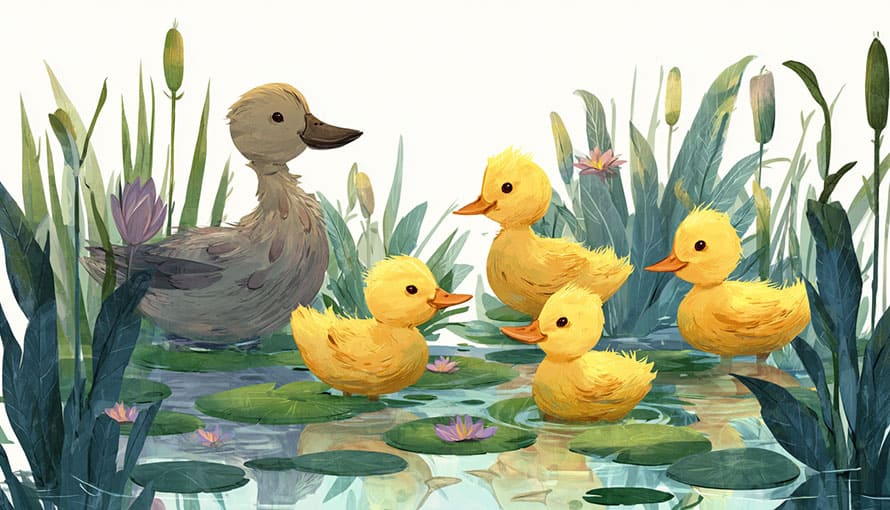
On the edge of a peaceful countryside lay an old farm, surrounded by wide fields and marshes. In summer, the grass was lush and green, and the air was filled with the scent of flowers. Right by the farm lay a big pond where frogs splashed and tall reeds shimmered in the water. On the bank, hidden among thick reeds, a mother duck nested on a clutch of eggs. One morning, the eggs began to crack open, and out popped little fluffy yellow ducklings one by one. The mother duck was brimming with pride and joy.
But beneath the largest egg, still unbroken among all the cheerful peeping and shuffling, something unusual waited. Mother Duck stared eagerly at the egg, waiting for her last baby to hatch. Finally, as the old rooster outside the farm crowed, the shell cracked open—and out came a big, odd-looking duckling. It was larger, had a longer neck, and its fuzz was gray, not golden. Mother Duck gazed at it in surprise, but kept love in her heart for all her babies.
When the ducklings learned to walk, Mother Duck took them on a tour of the yard. She strutted proudly, her line of little ones waddling behind. Everyone smiled at the fluffy yellow critters, but when they saw the big gray duckling, their eyes sparkled with doubt and scorn.
Mother Duck tried showing everyone that her gray duckling was just as loved. But neighboring ducks and chickens made rude remarks, shooed the odd duckling away, and sneered:
“Yuck, what an ugly little thing!”
“We’ve never seen the likes of you here!”
Not only the animals but also children running about the yard teased it. They would toss breadcrumbs toward it, but always close to the other ducklings, and laugh when the ugly duckling nervously shuffled near.
Because of the constant ridicule and snide remarks, the gray duckling felt clumsy and out of place. Wherever it went, others rebuffed it or put obstacles in its way. The more it grew, the more its sadness deepened.
The Decision to Leave
One day, the gray duckling decided it could no longer stand the endless insults and teasing. So the duckling set out through a gap in the fence, determined to leave the farm and everyone who looked down on it. At first, it felt lonely and scared. But hope drove it onward—there had to be some place in the world that would truly accept it.
Its journey took it across fields, meadows, and stretches of marshland. Occasionally, wild ducks and geese crossed its path. Some ignored it, others spoke briefly, but none invited it to stay long. The duckling felt more rejected than ever and couldn’t find a place where it wouldn’t be judged.
One chilly night, it came upon an old woman’s cottage. Hoping for warmth and a bite to eat, the duckling slipped inside. The woman lived with a cat and a chicken. The cat liked to lounge by the stove and watched the duckling carefully, sizing it up—was it a threat or just a strange toy? The chicken mockingly asked if it could lay eggs. When the duckling said it couldn’t, the chicken told it to learn to be useful or leave.
Though the duckling finally had a roof over its head, it didn’t feel at home. It missed open water, fresh air, and freedom. The cat and chicken constantly made it feel like an outsider. So the duckling took off once again, convinced the world held something better than this cramped cottage and unkind company.
Lonely Through the Winter
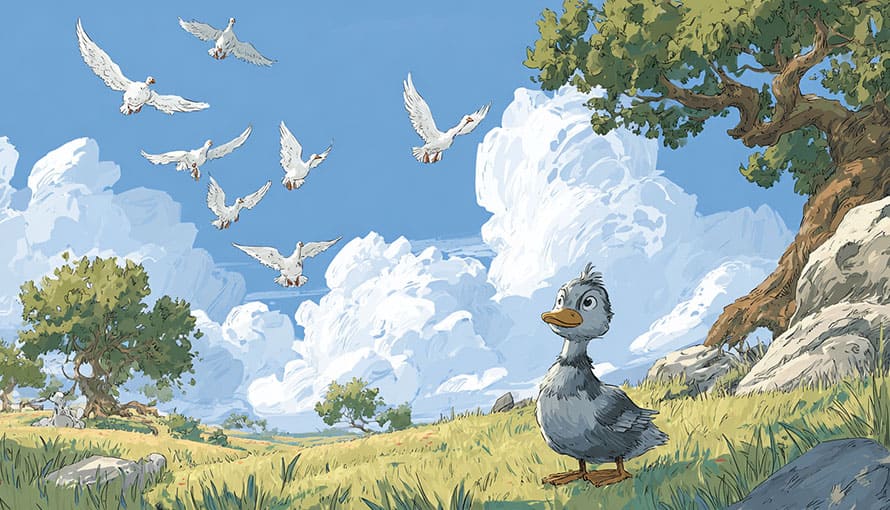
Time passed, and the air grew cold. In autumn, leaves turned gold, orange, and red. The duckling saw flocks of birds flying away to distant, warmer lands. One day, above it soared a group of graceful, long-necked, snow-white birds making melodious calls—the likes of which it had never heard. They were swans. The gray duckling gazed at them longingly, overwhelmed by a mysterious joy and a sadness, knowing that it didn’t belong.
As winter came, the ponds froze over. The duckling searched in vain for even a trickle of water to swim in. Everywhere was icy and bitter. It shivered with cold, and if a kind soul hadn’t rescued it from time to time, it could have perished. Once, a farmer found it nearly frozen and carried it inside to warm up. But when the duckling recovered, the noisy dogs and children in the kitchen startled it; flapping its wings, it accidentally knocked over pots and bowls. The panicked farmer drove it out, and the little duckling was back in the cold until spring finally arrived.
Remarkable Surprise
After the long, tough winter, warmer days returned. Snow melted, and the ponds came back to life. The gray duckling was exhausted, but the arrival of spring brought new hope. One morning, it found a pond rimmed with blooming flowers. The water sparkled in the early sun, and there, circling the shore, were those same magnificent birds—the swans. Its heart beat wildly at their beauty; it couldn’t explain why it wanted so desperately to belong with them.
But the duckling hesitated:
“I’m just ugly and gray—they’ll certainly chase me away.”
Yet something compelled it to move closer to the water. Steeling its courage, it stepped slowly toward the white flock, convinced:
“Better to be bitten and driven away now than to live an endless life of mockery.”
As soon as it entered the water, the swans surrounded it. Expecting sneers or rejection, the duckling was surprised—they greeted it kindly, bowing their heads. Confused, it glanced at its reflection in the clear water. No longer did it see an ugly gray duckling—it saw a beautiful white swan with a long, elegant neck!
The duckling, who had always heard it was ugly, realized it had grown into magnificent white feathers. The flock welcomed it gladly, and all the swans made joyful sounds and pressed close, greeting their new companion.
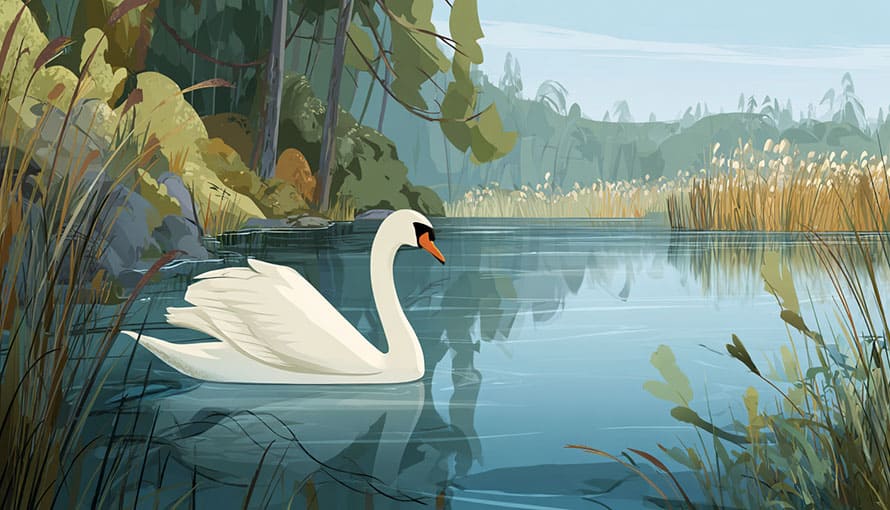
No longer the ugly duckling, but a gorgeous swan, it felt an overwhelming happiness. It spread its wings and soared with the swans over the pond, sunlight shining on its dazzling feathers. No more ridicule, no more pain—just joy in finally being who it truly was.
What once seemed only an “ugly duckling” was now a truly magnificent swan. It joined its fellows, gliding across crystal-clear water. Whoever saw it now would never call it ugly again. It had started life without the usual grace people expected, but something special had always been inside, waiting to bloom. All it needed was patience, courage, and hope.
Fun Facts for Kids
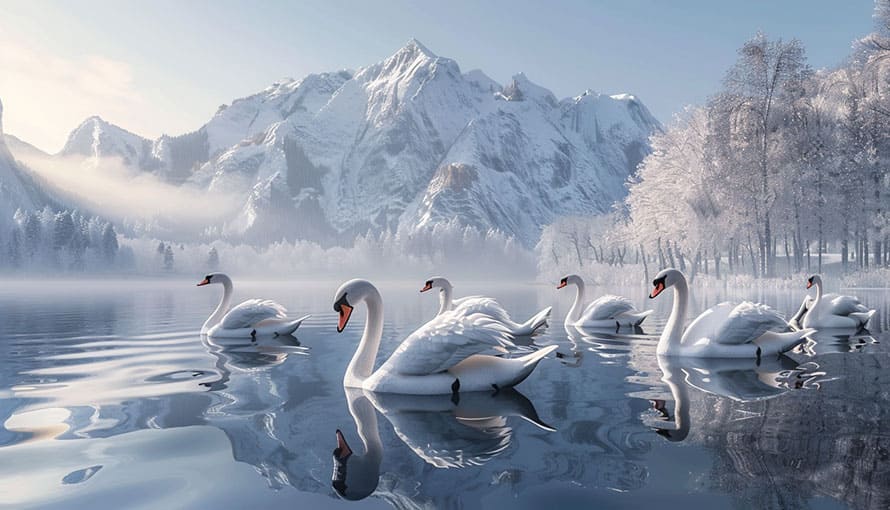
10 Fun Facts About Swans for Kids
What lessons does the fairy tale The Ugly Duckling teach children?
Facts About The Ugly Duckling
- Author and Origins:
The Ugly Duckling (Den grimme Ælling) was written by Danish storyteller Hans Christian Andersen and first published in 1843. Andersen poured his own feelings and childhood experiences into the tale, having felt different and misunderstood himself. - Plot and Main Message
The story follows a little duckling, judged and dismissed for its appearance, who suffers loneliness until it discovers its true identity as a swan. The central theme is inner worth and self-discovery—the belief that true beauty will emerge in time. - Autobiographical Aspects:
Andersen was often teased for his looks and differences as a child. Many literary experts see parallels between his search for acceptance and that of the duckling. The story reflects Andersen’s belief that every person has unique potential inside. - Universal Message:
In his tales, Andersen often highlighted values like honesty, kindness, and individuality. The Ugly Duckling teaches us not to judge by mere outward appearance and reminds us that those first shunned for being different may possess exceptional talent and beauty. - Adaptations and Popularity:
The story has been adapted into stage plays, musicals, ballets, and animated films. For its deep and moving symbolism, The Ugly Duckling is considered one of Andersen’s best-loved tales around the world. - Why This Story Still Matters:
Themes of difference and the search for self-identity are timeless, resonating with every generation. That’s why The Ugly Duckling is still cherished—it inspires us not to be afraid of growth or uniqueness, and to recognize the worth in ourselves and others, even when it takes time to see it.