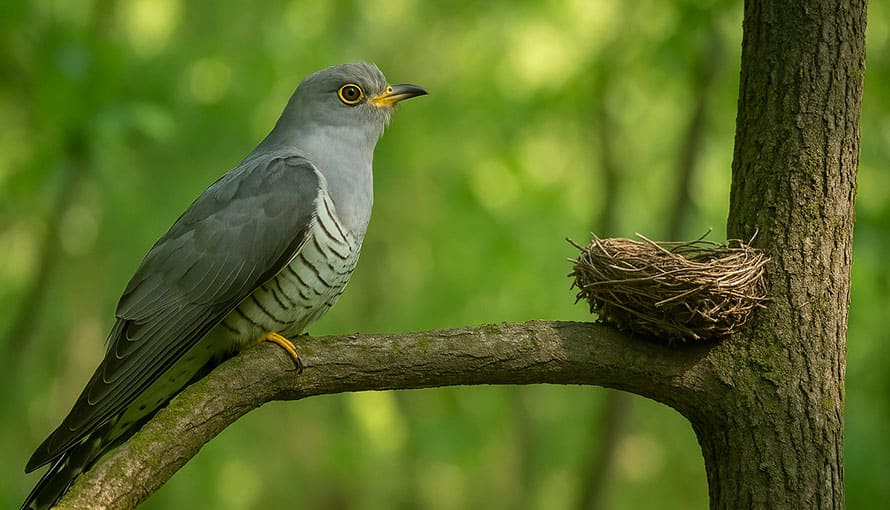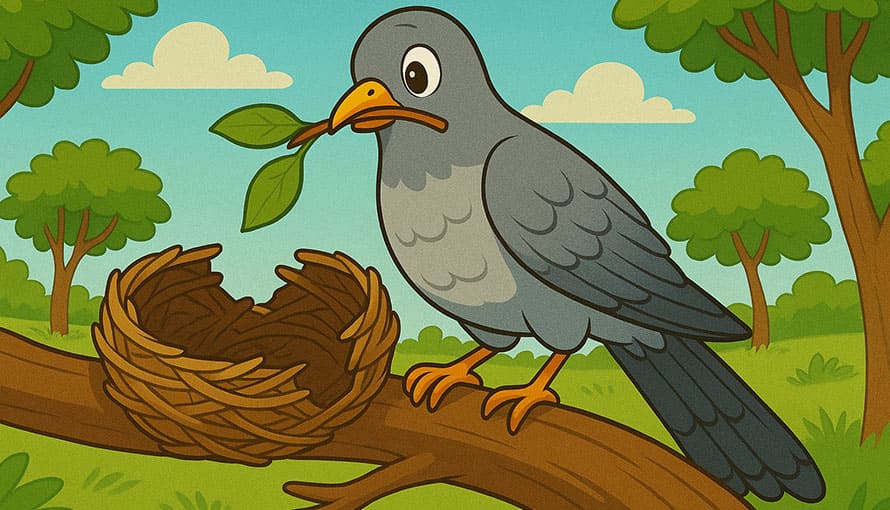
In a faraway green forest, where the reflections of tall spruce trees danced on a mountain lake, lived a merry and curious cuckoo. In the forest, everyone called her Kuka. She was a lovely bird with silvery-gray feathers that sparkled in the sunlight like treasure. Her bright, lively eyes seemed to glint with every secret hidden in the woods.
When warm spring rays arrived, Kuka’s voice filled the air with the loveliest forest songs. Her singing was so clear and melodic that even the old wolves, hidden in the thickets, paused to listen. Every morning at dawn, she filled the woods with her strong “cuckoo, cuckoo,” making the leaves quiver. That’s how Kuka announced spring’s return, bringing life back to the forest.
But Kuka wasn’t alone in the woods. She had bird friends—like Fero the shrike, a cheerful fellow with black-and-white plumage who bounced noisily from branch to branch. Then there was Dorka the thrush, a petite but brave singer whose melodies were as sweet as blooming flowers and made every listener smile. Finally, up above, was Hubert the hawk—serious at times, but a fair guardian who watched over forest order and respected the forest’s traditions.
When spring was at its brightest, the trees donned fresh green leaves, flowers unfurled their petals, and every corner buzzed with life—it was nesting time. Most birds cheerfully began building their nests: twigs, grasses, and feathers crisscrossed the air, each bird family preparing a safe home for their babies.
But Kuka was too caught up in her powerful singing. While all the mother birds were laying eggs in their own nests, Kuka still hadn’t figured out where or how to build the perfect one. She tried laying twigs over and over, but they always rolled away. Sometimes a stick fell to the ground, other times a blade of grass blew off. When she finally finished a nest, it felt fragile and unstable. All this confusion made her seek advice from the forest elders—Pankrác the nightingale and wise Hedviga the owl, who knew the forest’s stories best.
On the old oak, where the pair would sit, Kuka sang her plea:
Pankrác, Hedviga, dearest friends of mine,
All the birds are nesting just fine.
But worries about my nest weigh on my heart—
I can’t find joy in this building part.
Where will I lay my beautiful egg?
I long to be a good mom, just like the rest.
Pankrác and Hedviga exchanged a glance. The old owl rocked her head, then hooted wisely:
There’s room in this forest for every bird—
But sometimes you must find the path life grants you.
Your way may be different from that of those all around you,
Yet in our differences, strength and courage abound.
Try asking a friend for help; you don’t have to do everything alone.
These words gave Kuka hope. She watched how other birds built nests: Dorka made a small round nest by the stream; Fero the shrike chose high branches for a wide view. But no nest she saw felt just right for her. “I could never manage that,” Kuka sighed, imagining all the patience and effort it took.
After days of trials and dead ends, Kuka confided in Dorka. The thrush listened kindly and replied,
“I’d happily help you build a nest, Kuka. But if it truly doesn’t work for you, let’s think of something else. Your egg must be safe—maybe we can find a creative way!”
Kuka smiled, knowing she had friends she could count on. Soon, a new, unusual idea blossomed:
“Maybe I could lay my egg in your nest so it’ll be safe. Then I’ll help guard the area, keeping predators at bay.”
Dorka looked surprised but finally nodded.
“You know, I won’t talk you out of it. In this forest, we help each other. But it will be unusual!”
Fero the shrike, the experimenter, agreed:
“You have my trust, Kuka! You couldn’t have better friends for this plan.”
So Kuka, Dorka, and Fero began their unusual adventure. Kuka laid her egg in the safe nest alongside Dorka’s, where it was warm and snug. This way, her egg wasn’t left on the cold ground, and Kuka took up watch in the treetops for weasels or snakes. Hubert the hawk—always a friend—promised to keep little ones safe, upholding the forest’s harmony.
While Dorka kept the eggs warm, Kuka could fly through the woods, bringing news—are there hungry birds, who needs help? Thanks to this, Kuka became a valued messenger, always alerting her friends whenever something was happening. Her egg was well cared for, and she could do what she did best: sing boldly, observe attentively, and help others.
Time passed, and in nests across the forest, chicks hatched, stretching their wings and chirping as fragrant air called them out. Kuka proudly visited her growing babies, teaching them how to find juicy bugs and perfecting their “cuckoo” call to catch the forest’s attention. Her chicks were happy, knowing their mom not only sang beautifully but also bravely chose to do things differently.
And so, birds say that cuckoos lay their eggs in other birds’ nests—not to harm, but because building nests is hard for them, and instead, they’re wonderful forest heralds. When something happens, they’re always the first to call out.
Each of us has something that makes us special. Even a different or unusual way of life deserves respect. Sometimes, we need help from friends, but we can also protect and delight our world with our own unique gifts. Our differences are often what make life so colorful and exciting.
Fun Facts for Kids