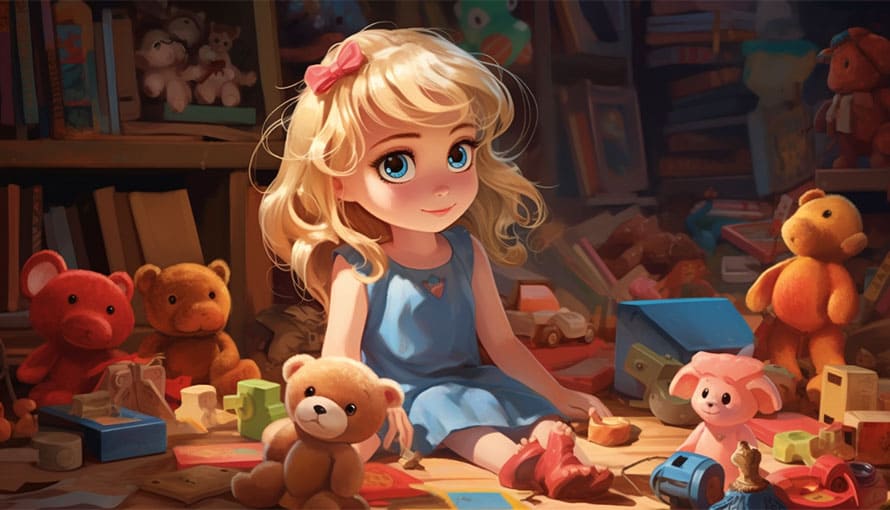
In a picturesque little village lived a little girl named Adelka. Adelka was clever, but there was one thing she always struggled with—she didn’t want to tidy up her toys. Her room was always messy. Toys lay scattered on the floor, books were spread out on the table, and clothes were tossed everywhere.
Whenever her parents told her to clean up her room, Adelka would shake her head and say, “It’s boring to clean up after I play. I think I have better things to do.”
“Adelka, don’t you want your toys to be in their proper places?” her mother would ask.
“Boring, boring, boring,” the little girl always repeated.
Her mother frowned and said, “But Adelka, cleaning up isn’t just boring work; it’s about caring for your toys and being responsible for them. If you leave them lying on the floor and don’t take care of them, your toys will leave you.”
Adelka didn’t understand what her mother meant. After all, toys can’t just walk off by themselves. She didn’t take her mother’s words seriously. She didn’t tidy her room the next day or the day after. She kept ignoring the mess in her room and avoided cleaning up.
One day, when she got home from school, she found her room strangely empty. Smiling, she thought her parents had cleaned up for her. But when she tried to take toys from her cupboard, there were none. Adelka opened the closet; it was empty. She searched the drawers—nothing. She looked all over the house, but couldn’t find a single toy.
“Mom, where did you put all my toys?” Adelka asked.
“I didn’t do anything with them. They must be in your room,” her mother replied.
“They’re not there!” Adelka shouted angrily.
“If they’re not there, then they must have left. I told you: if you don’t tidy them up and take care of them, they’ll leave,” her mother said.
“When will they come back?” the girl asked, her eyes full of tears.
“When they see that you’re hardworking and can take good care of them, they’ll surely return,” her mother answered.
From that moment on, Adelka always cleaned up after herself. She would also ask her parents if they needed any help. One day, when she came home, she found a few of her toys had returned. Even though there were just a few, she was overjoyed. She played with them all evening. And when it was time for bed, Adelka lovingly put her toys back in their place. The next day, there were even more toys. As time went on, all her toys gradually came back to her.
Adelka now understood the value of taking care of things. Every day after playing, she tidied up her toys, always with a smile and a song on her lips.